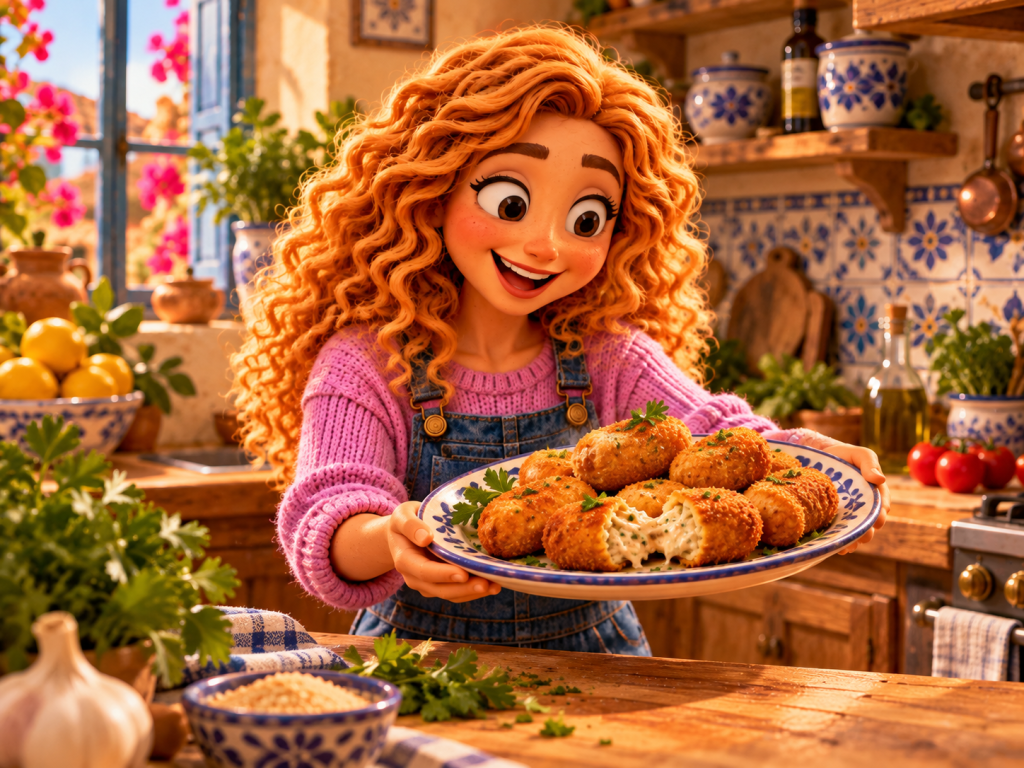
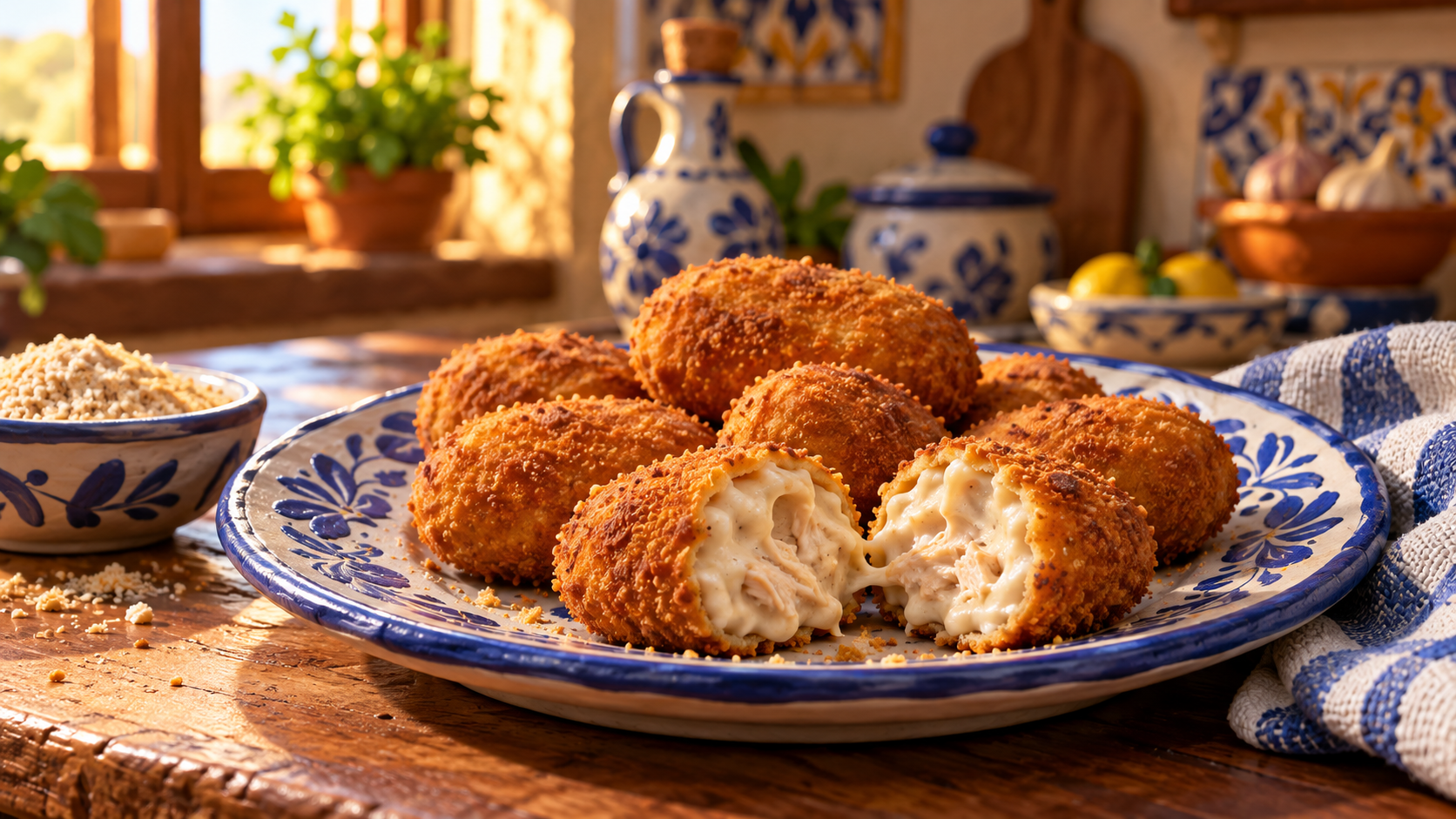
Crispy on the outside, creamy on the inside: croquetas are a familiar favourite in Spanish home cooking and tapas bars. Chicken, ham, mushrooms or fish — there is room for many fillings, and every household has its own way of making them.
A little history
Croquettes have French roots and became established in Spanish cooking during the nineteenth century. Their story includes different recipes and fillings, so it is misleading to say that they began only as a rice-pudding dessert or that the familiar Spanish version was invented during the Civil War.
Emilia Pardo Bazán discussed croquetas in La cocina española moderna, well before that conflict, praising the softness of well-made Spanish versions. The creamy centre has long been part of their appeal.
They also belong to la cocina de aprovechamiento: cooking that makes good use of food already prepared. Leftover cooked chicken can become something delicious in its own right.
Chicken croquetas: ingredients
Chicken croquetas are a classic family recipe. The quantities below are those from my original recipe, for approximately 2–4 people, depending on portion size.
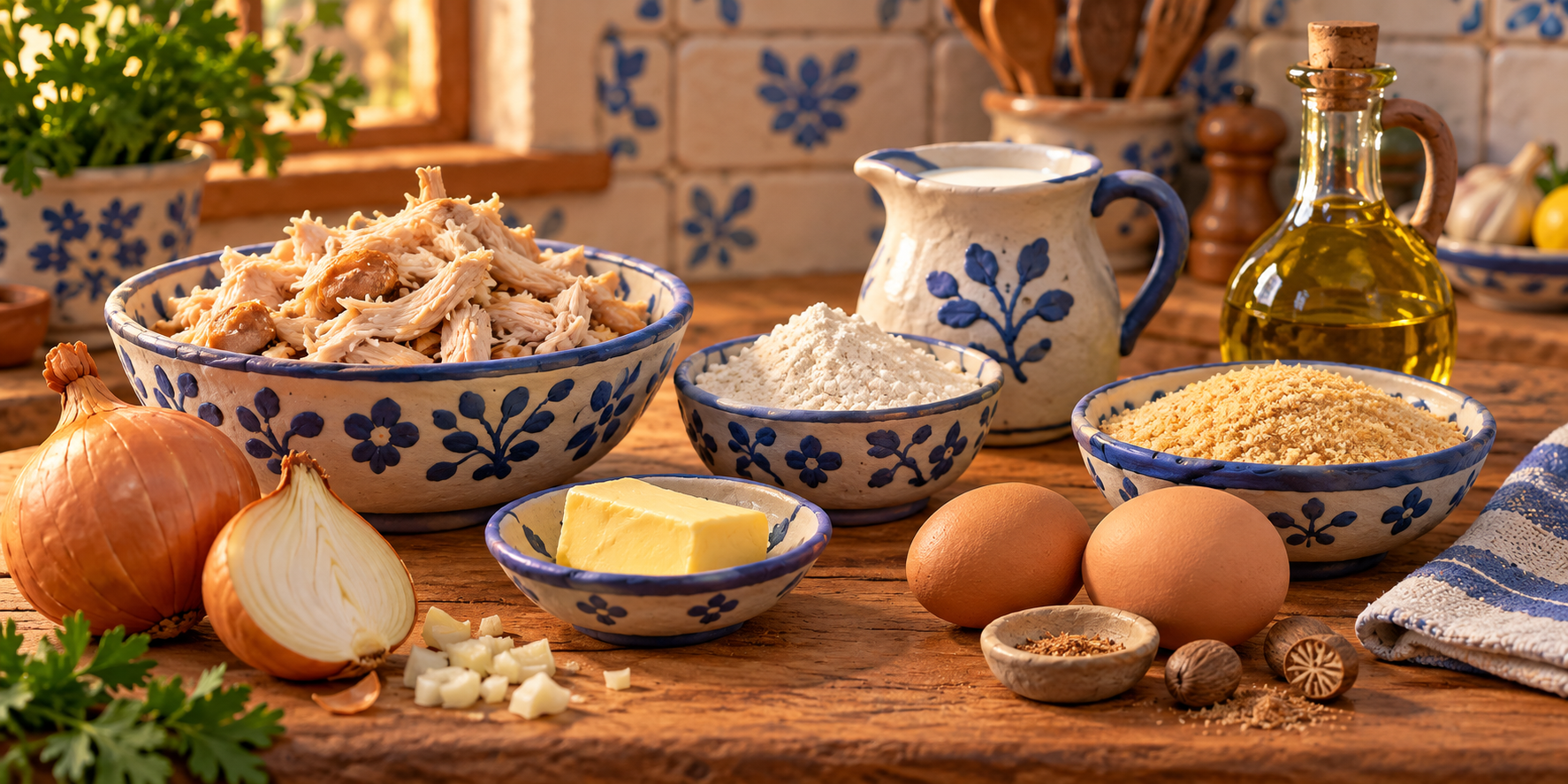
- 1 chicken breast or thigh
- 1 medium onion
- 2 tablespoons of butter
- 3 tablespoons of flour
- 500 ml milk
- Salt and black pepper, to taste
- A small pinch of ground nutmeg
- 2 eggs, beaten, for coating
- Breadcrumbs, as needed
- A little olive oil for the onion
- Sunflower oil for frying
Make the filling
- If using raw chicken, remove any skin, cook it thoroughly in a saucepan with water and a little salt, then shred it. You can also use already-cooked chicken.
- Finely chop the onion. Cook it gently in a frying pan with a little olive oil until softened and translucent.
- Add the shredded chicken, pepper and a little nutmeg. Stir over a low heat for about 3 minutes, then set aside.
- In a saucepan, melt the butter over a low heat. Add the flour and stir for about 2 minutes.
- Add the milk gradually, stirring or whisking to prevent lumps. Continue cooking and stirring until the mixture is thick; the first bubbles alone do not mean it is ready.
- Stir in the chicken and onion. Continue cooking gently until you have a cohesive mixture thick enough to hold its shape after chilling. Taste and adjust the seasoning.
Chill, shape and coat
- Transfer the mixture to a shallow dish. Cover with food-safe film touching the surface to prevent a skin forming. Cool promptly and refrigerate.
- Chill for at least 3 hours, preferably overnight, until the mixture is firm enough to shape.
- Take small portions and form oval croquetas.
- Dip each one in beaten egg, then roll it in breadcrumbs until evenly coated.
Fry and enjoy
- Heat plenty of sunflower oil in a deep frying pan, leaving room so the oil cannot overflow.
- Fry the croquetas in small batches until golden and hot throughout. Avoid crowding the pan.
- Lift them out carefully and drain on kitchen paper.
- Serve warm — and enjoy!
A little Spanish for the kitchen
| Español | English |
|---|---|
| la harina | flour |
| la mantequilla | butter |
| el pan rallado | breadcrumbs |
| la nuez moscada | nutmeg |
| la masa | mixture / dough |
| remover | to stir |
| desmenuzar | to shred |
| rebozar | to coat |
| freír | to fry |
| crujiente | crispy |
Remueve la masa.
Stir the mixture.
Deja enfriar las croquetas.
Let the croquetas cool.
¡Qué buena pinta!
That looks delicious!
¡Buen provecho!
Enjoy your meal!
Did you know?
The Spanish word croqueta comes from French croquette. The name is connected with croquer, to crunch — a lovely match for that crisp outer coating.
The 16th of January is popularly celebrated as Croqueta Day. You do not need to wait until then to make a batch, of course!
Download your illustrated Spanish notebooks
Practise kitchen vocabulary, recipe verbs and useful expressions with three illustrated PDFs: vocabulary, exercises and answers. Four pages each, with Spanish–English vocabulary support.
Sources and further reading
RTVE: the French origins of croquettes and their place in Spanish cooking · Real Academia de Gastronomía: Emilia Pardo Bazán’s La cocina española moderna.