Imagine a sunny morning in Santa Cruz de Tenerife. The air is full of conversation, the stalls are piled high with local produce, and Paula and Javier have a shopping list to finish. Today, we’re joining them at the beautiful Mercado Nuestra Señora de África — and learning the little phrases that turn Spanish vocabulary into a real conversation.
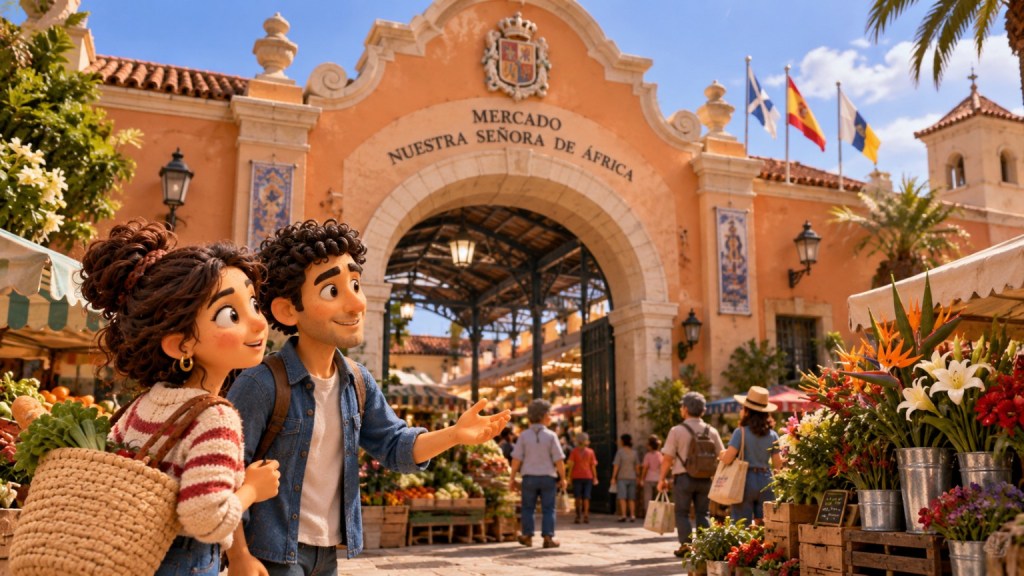
Our illustrations are inspired by this much-loved Canarian market. Instead of memorising another list of food words, we’ll follow a short story: finding your place in the queue, asking for a local speciality, paying and heading home. Ready? ¡Vamos al mercado!
1. «¿Quién da la vez?» — Finding your place in the queue
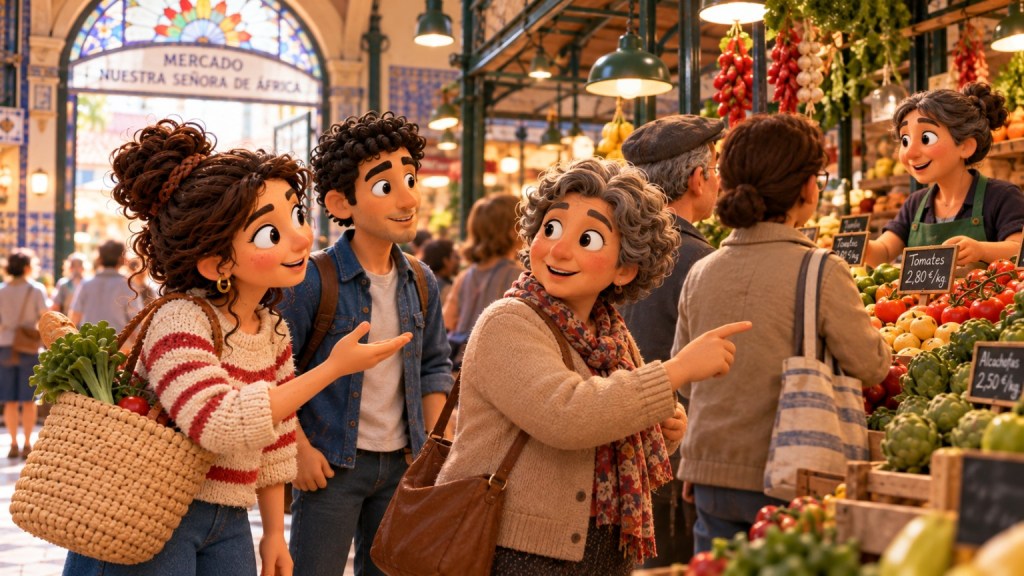
Before Paula can buy anything, she needs to know whose turn it is. At some traditional market stalls, there is no numbered ticket: the customers themselves remember who arrived first. This is where a wonderfully useful expression comes in.
Paula: Buenos días, ¿quién da la vez?
Señora: Yo. Ustedes van después de mí.
Paula: Perfecto, muchas gracias.
“Good morning, who’s last in the queue?” — “I am. You’re after me.” — “Perfect, thank you very much.”
What does «dar la vez» mean? Here, it means identifying the person you should stand behind to keep the order of the queue. You may also hear other ways of asking in different parts of Spain. The important thing is to listen, greet people and know when it is your turn.
2. «¿Me pone medio kilo?» — Asking for what you want
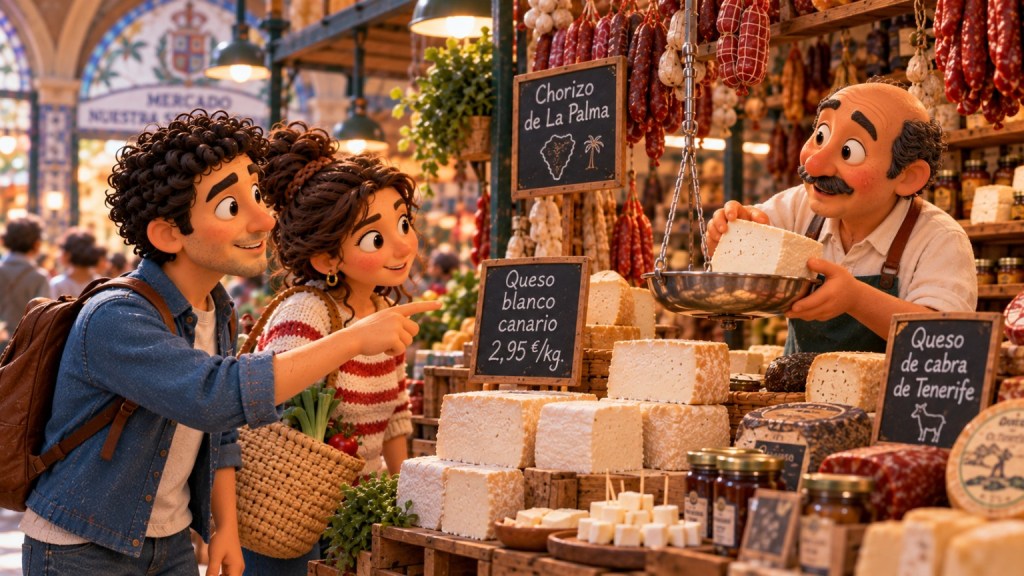
Now it’s Javier’s turn. He stops at a stall selling queso blanco canario (Canarian white cheese), cheeses from Tenerife and chorizo de La Palma. The products tell us something about where we are: this isn’t just any shopping trip, but a little taste of the Canary Islands.
Javier: Buenos días. ¿Me pone medio kilo de queso blanco, por favor?
Tendero: Claro. ¿Así está bien?
Javier: Sí, perfecto. Gracias.
“Good morning. Could I have half a kilo of white cheese, please?” — “Of course. Is this amount all right?” — “Yes, perfect. Thank you.”
A phrase worth remembering: ¿Me pone…? is a natural, polite way to ask for something in a shop. Another useful option is Quería… (“I’d like…”). For example: Quería un poco de queso, por favor.
3. «¿Algo más? ¿Cuánto es?» — Finishing the purchase
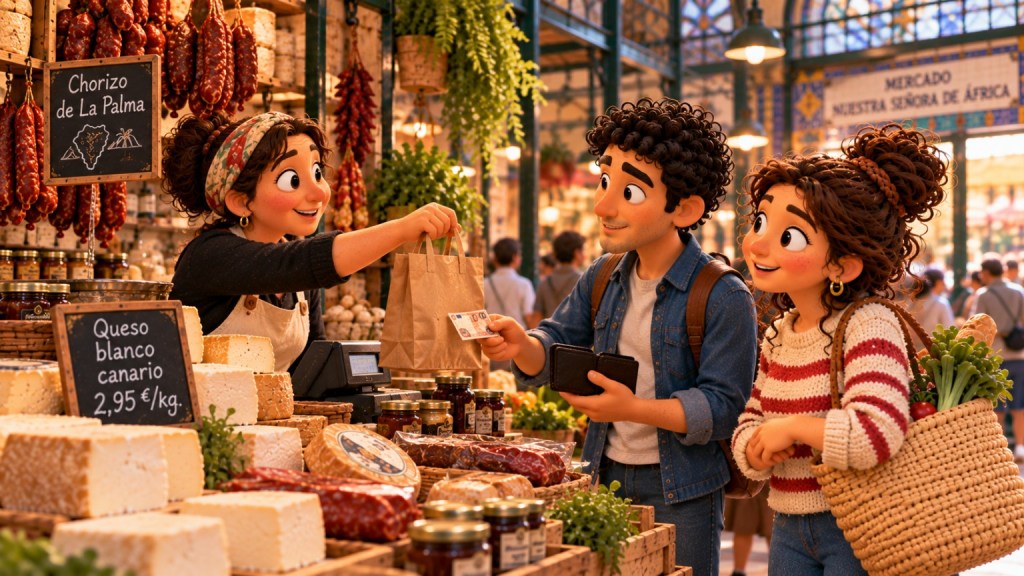
A few moments later, the shopkeeper hands over their bag. Javier takes out his wallet. This is a moment when you can sound much more confident with just three short expressions.
Tendera: ¿Algo más?
Javier: No, nada más, gracias. ¿Cuánto es?
Tendera: Son diez euros.
Javier: Aquí tiene. ¡Hasta luego!
“Anything else?” — “No, nothing else, thank you. How much is it?” — “That’s ten euros.” — “Here you are. See you!”
Notice that ¿Cuánto es? asks for the total price. You’ll also hear ¿Cuánto cuesta? when asking how much a particular product costs. And when you’re finished, a simple gracias, hasta luego is always welcome.
4. Back home with a little more Spanish
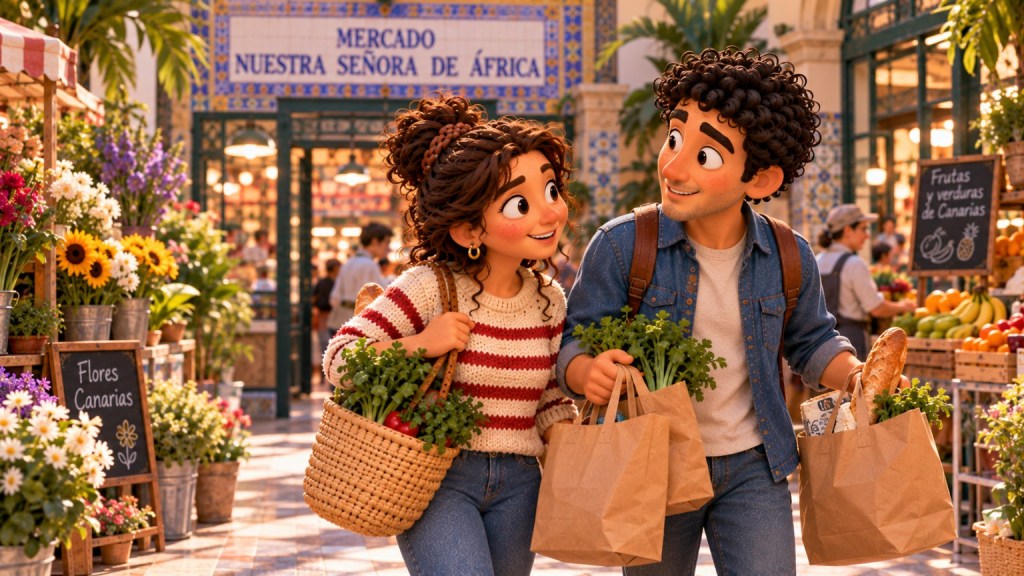
Paula and Javier leave with their bags, some fresh produce and — perhaps best of all — a few more conversations under their belts. You don’t need complicated grammar to begin taking part in everyday life: sometimes the most useful Spanish is just knowing when to say the right thing.
Before you practise, could you say these three things in Spanish? Ask who is keeping the queue; order half a kilo of white cheese; and ask for the total price. Try saying each one aloud.
Your turn: an interactive trip to the market
Follow Paula and Javier around the stalls in our interactive activity. You’ll practise food vocabulary, useful shopping phrases and listening comprehension, with feedback as you go.
Learning the Cervantes Language · Learn Spanish through stories, culture and real-life conversations.
Illustrations created for this learning resource and inspired by the Mercado Nuestra Señora de África; they are not documentary photographs.