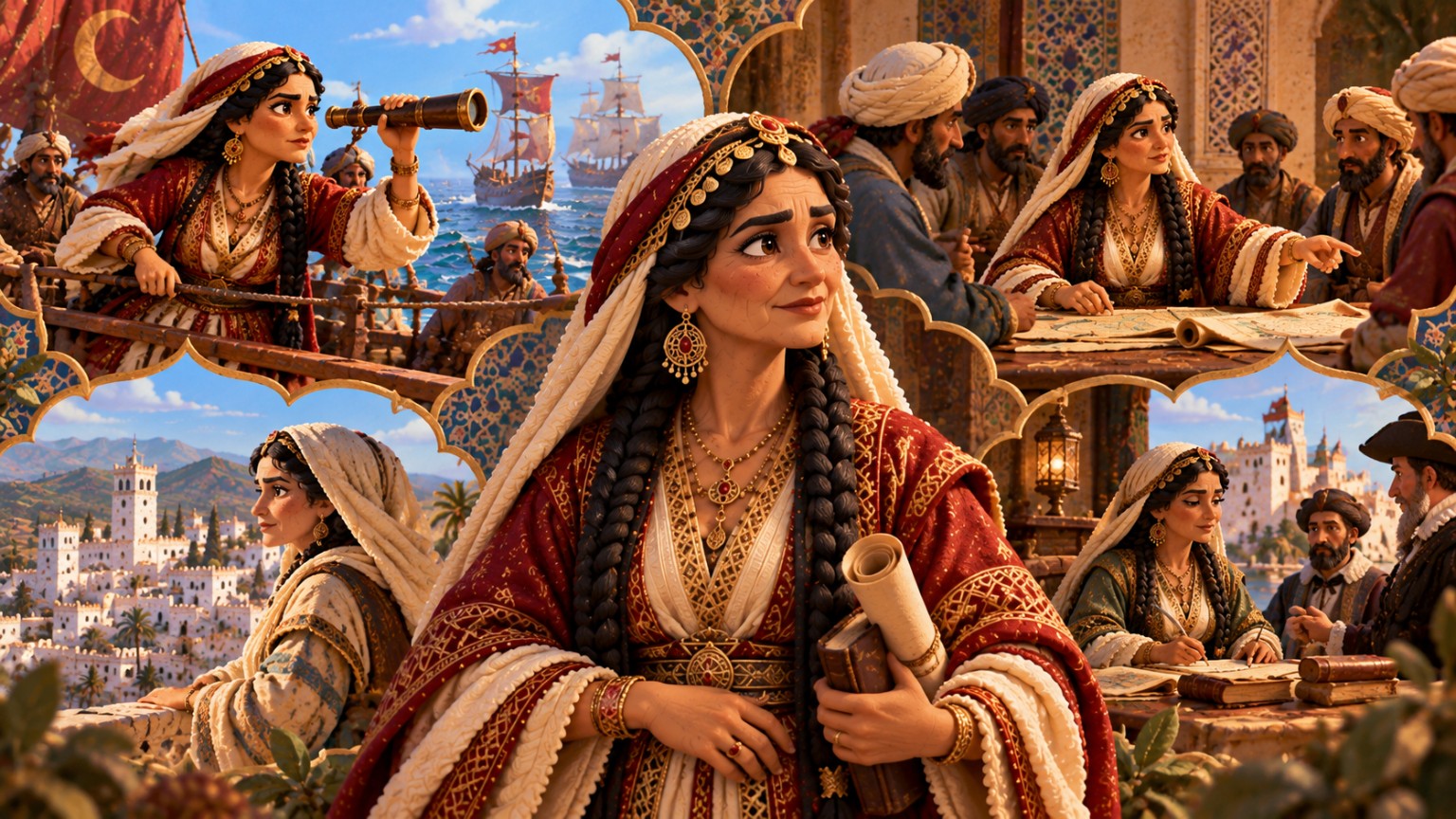
Prologue · The Lady of Tétouan
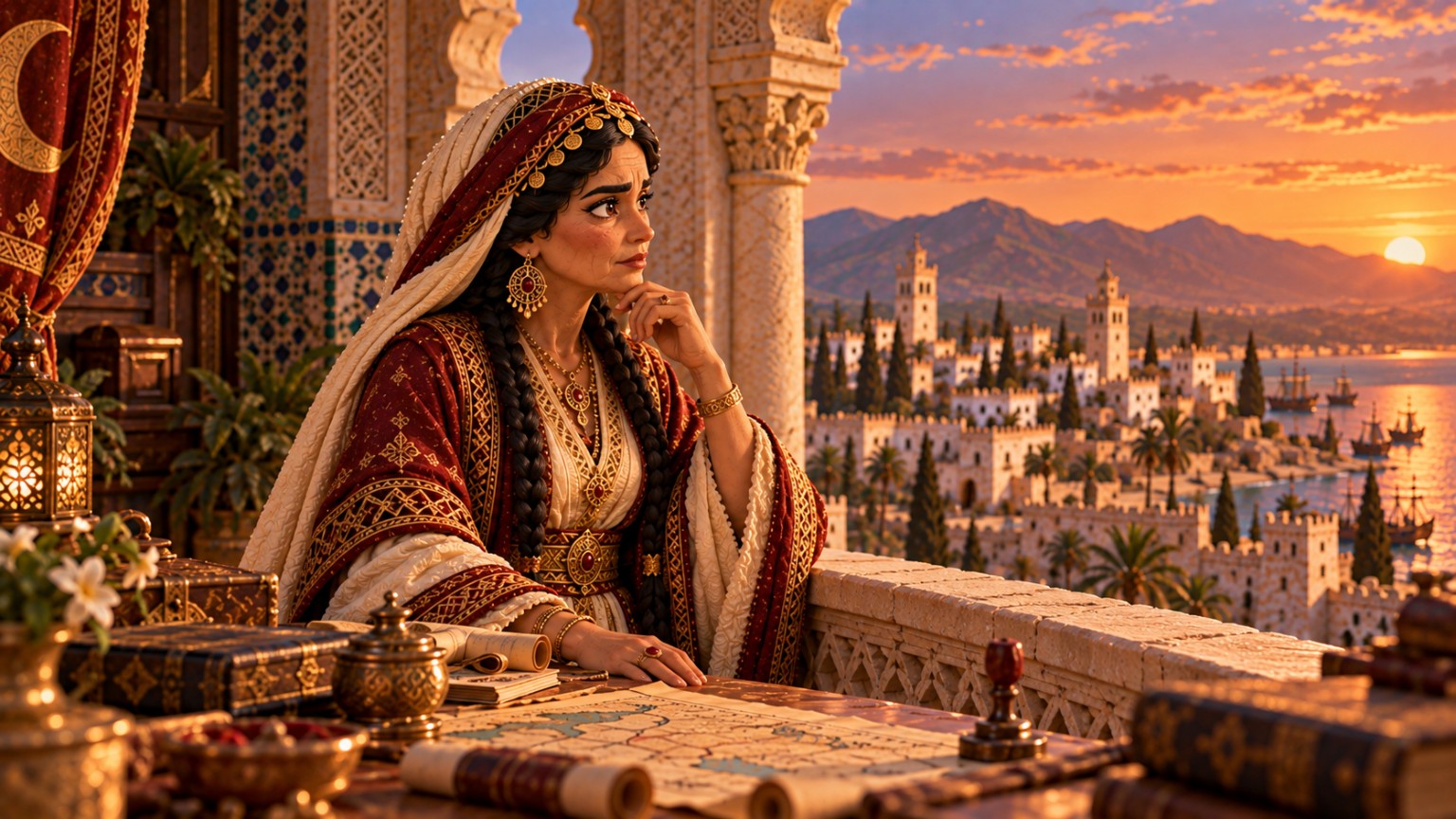
Some names survive the centuries wrapped in sea spray and gunpowder. Sayyida al-Hurra’s is one of them. She was called the Lady of Tétouan and, in time, the corsair queen. It is easy to picture her looking towards the Mediterranean, a sea that brought ships, goods and news, but also danger. Yet her story did not begin aboard a ship. It began much earlier, with a family that knew the pain of leaving a homeland behind and a city that would learn to rise again. To discover the woman behind the legend, we must travel back to the late fifteenth century, when both shores of the Strait of Gibraltar were changing forever.
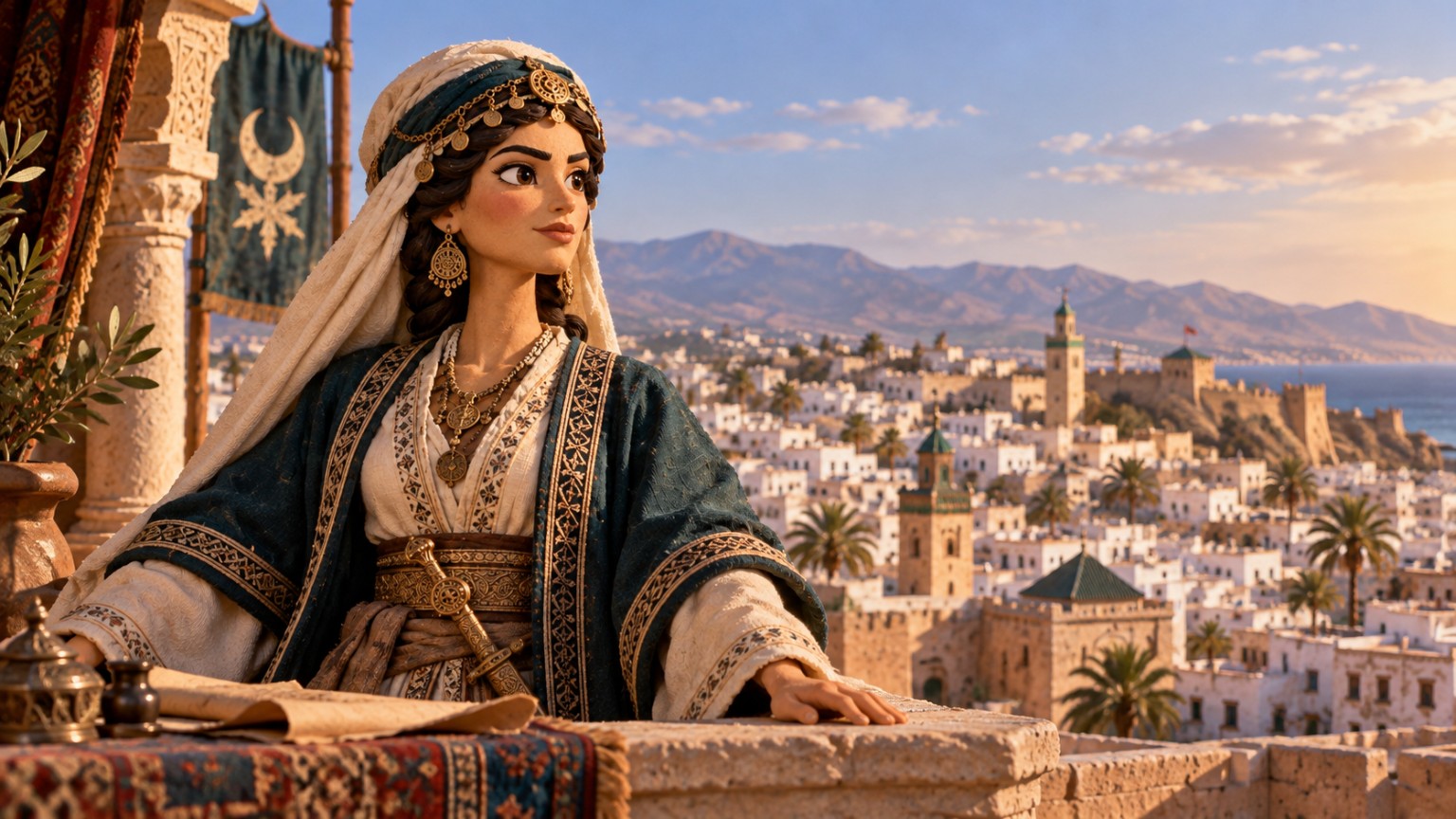
1 · Roots in al-Andalus
Across the strait lay al-Andalus. For many Muslim families, its loss meant more than the end of a kingdom. It meant leaving familiar streets, courtyards, voices and memories behind. Sayyida’s family was among those who built a new life in North Africa. Some traditions place her earliest years in Granada; others connect them to the Moroccan mountains. Whatever the truth, she grew up in the shadow of one world fading and another taking shape. Her father, Ali ibn Rashid, became a leading figure in Chefchaouen. And the girl who would one day be called al-Hurra—“the free” or “the noble”—inherited more than a family name: she inherited a story of displacement, resilience and new beginnings.
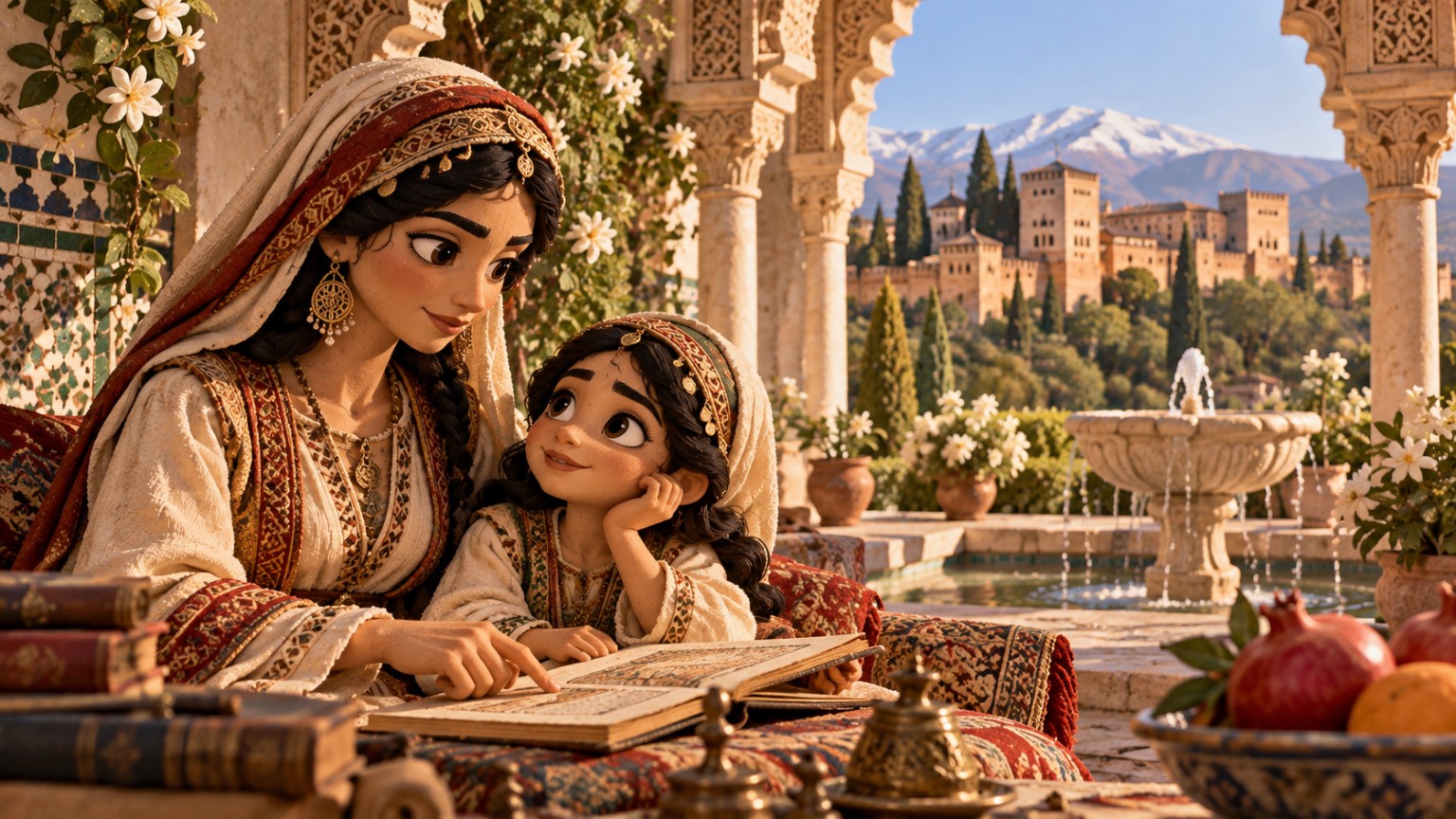
2 · A New Life Across the Strait
Chefchaouen did not face the sea. It nestled among the Rif Mountains, as though the stone itself could shelter those seeking refuge. Memories of al-Andalus mingled there with the lives and traditions of northern Morocco. Young Sayyida grew up close to a father who understood the value of alliances and the need to defend a town. People spoke of the past in their homes and streets, but they also had to think about tomorrow. How do you rebuild a life when everything has changed? How does an unfamiliar place become home? Those questions belonged to an entire generation. And as Chefchaouen put down roots, Sayyida’s path began to lead towards another city: Tétouan.
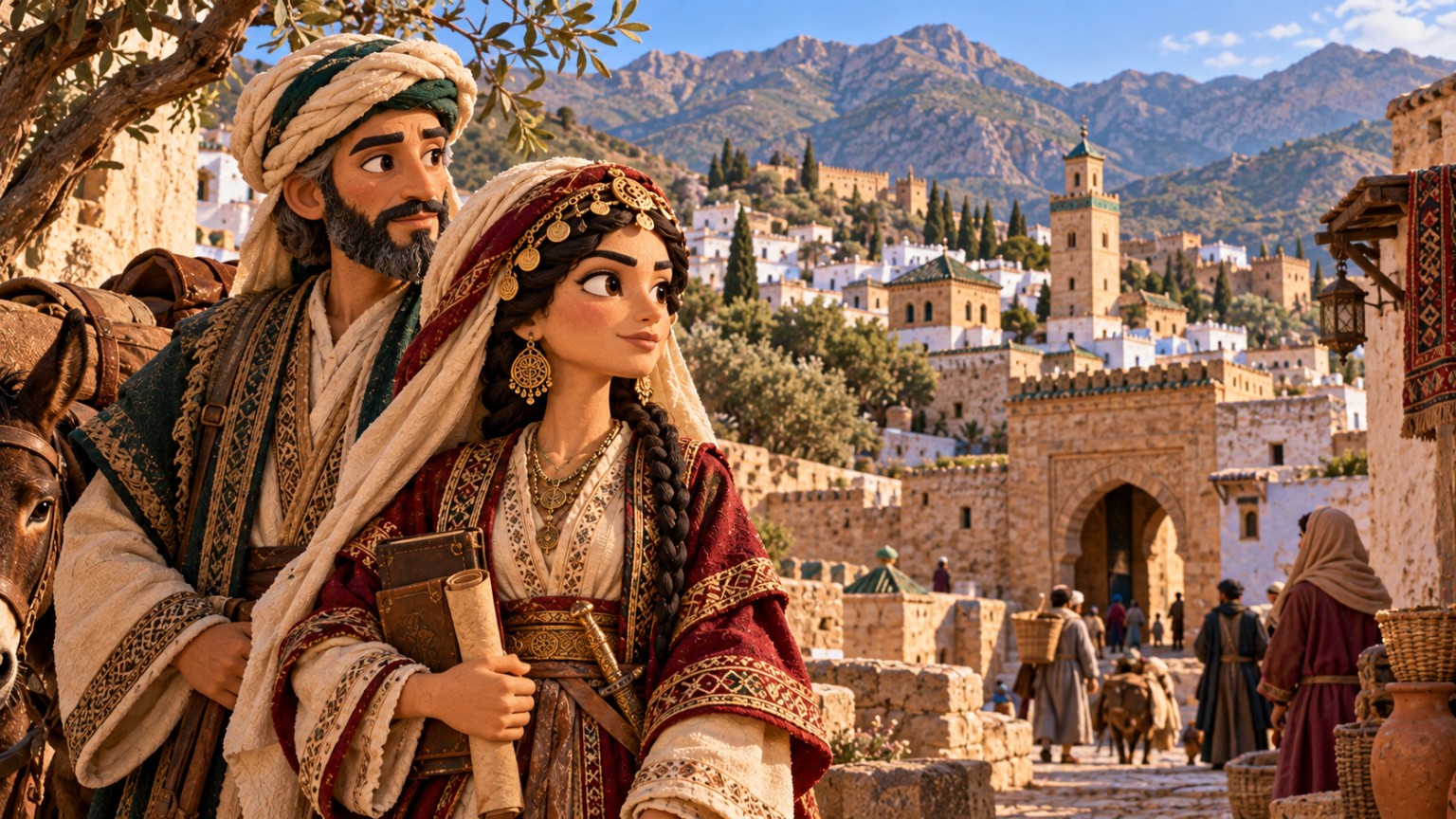
3 · Tétouan Reborn
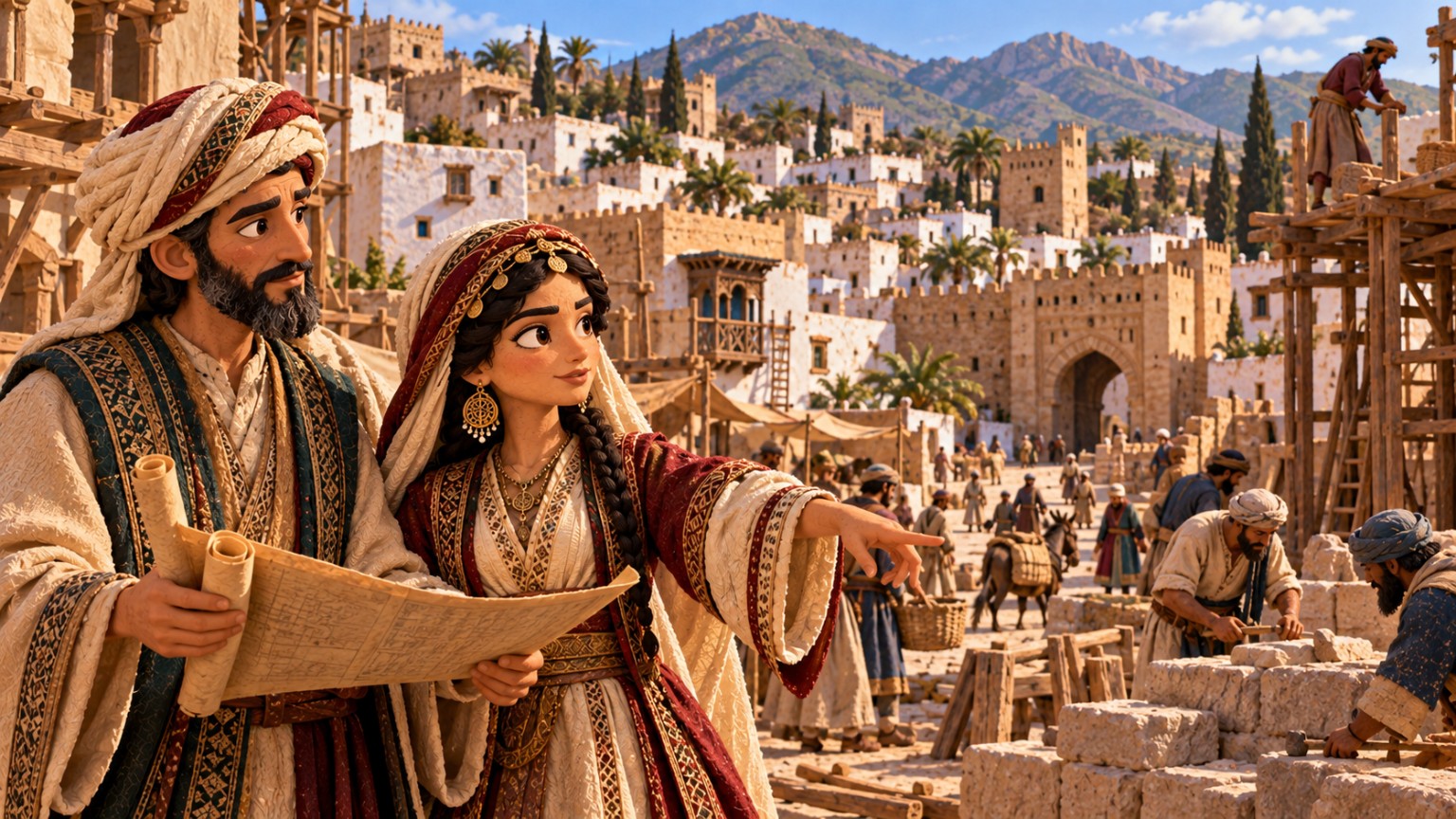
Tétouan had endured destruction and decline, but it was not destined to remain silent. In the late fifteenth century, families from al-Andalus helped rebuild it under the leadership of the al-Mandri family. Homes rose again, streets took shape and the city found a new rhythm. Sayyida became part of that story when she married into the family. Sources differ over the precise identity of her husband, but the political importance of the connection is clear. For Sayyida, Tétouan became far more than a new home: it became the stage of her public life. A city partly rebuilt by people who had lost their own homes was finding its voice. And Sayyida would become one of its most powerful voices.
4 · A Woman in Power
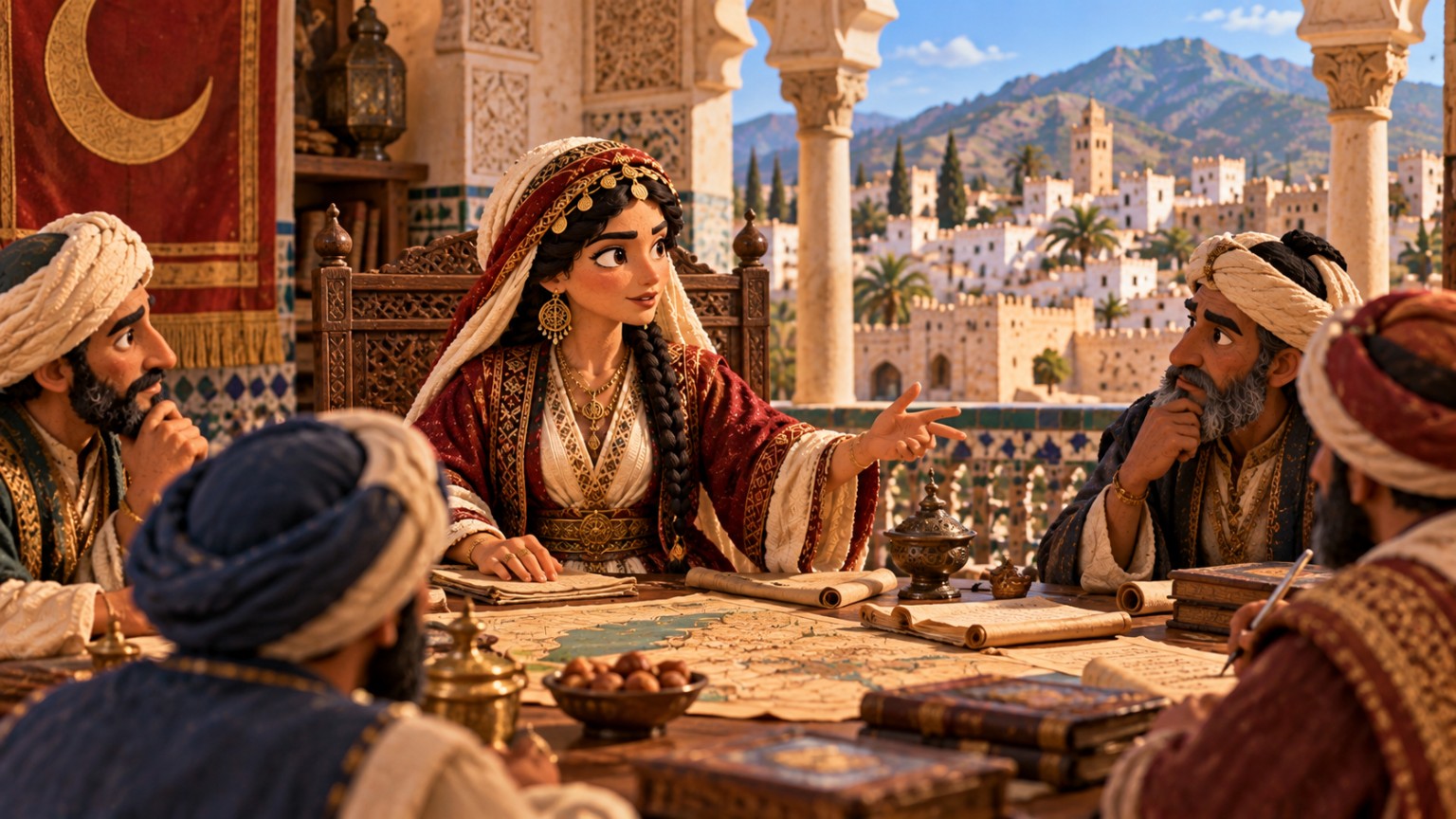
Governing Tétouan was not a matter of sitting in a palace waiting for news. Merchants had to be heard, influential families dealt with, threats along the coast watched and rival powers negotiated with. Sayyida came to know this world closely and, after her first husband’s death—usually dated to around 1519—she took charge of the city. Here was a woman exercising authority in a political world dominated by men. Her strength lay not simply in her title, but in her ability to hold alliances together and make decisions. Imagine the low hum of a council chamber, maps spread across a table, voices arguing over the next move. Amid it all, Sayyida was no ornament. She was the person expected to choose a path.
5 · The Battle for the Mediterranean
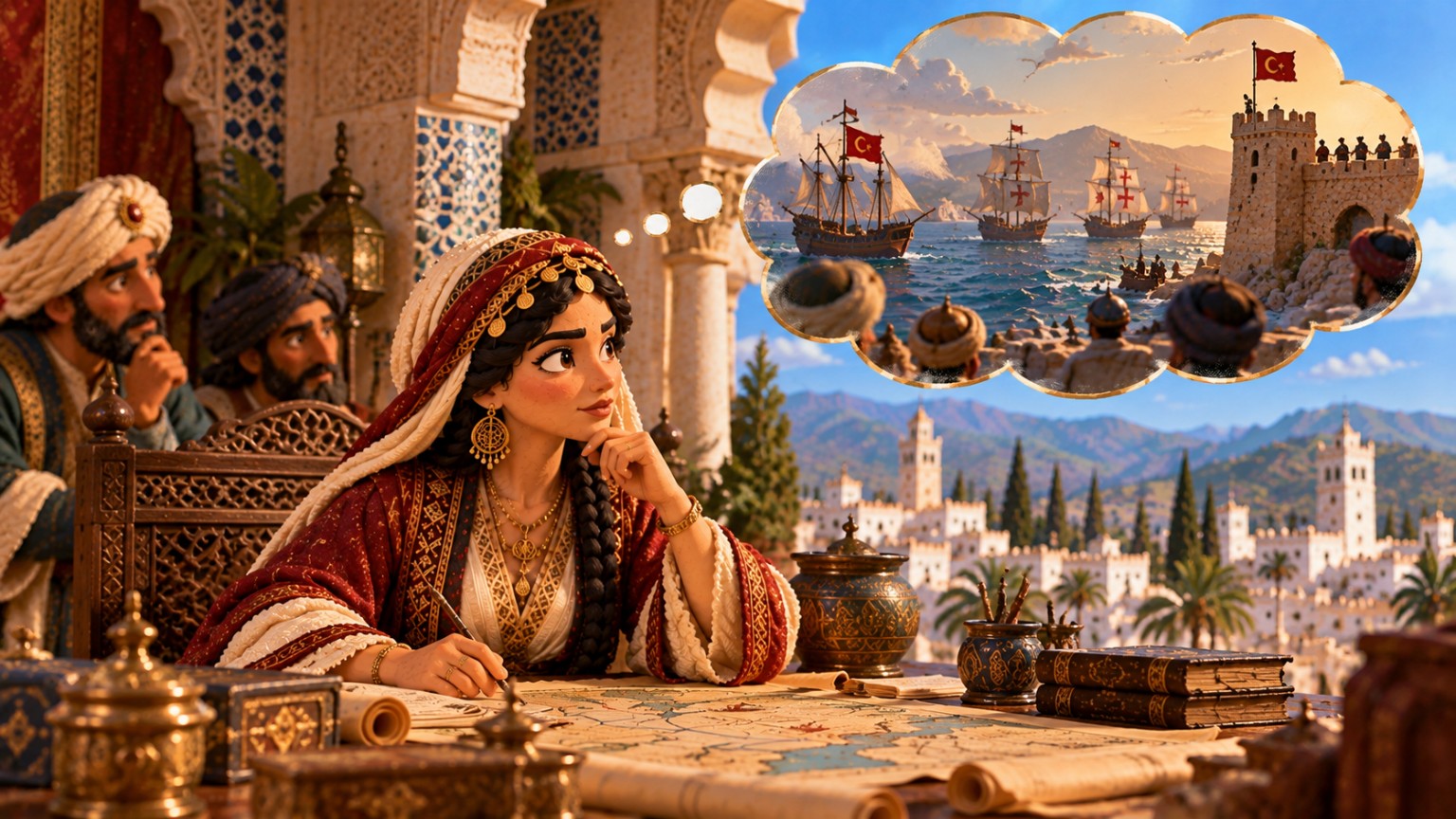
The Mediterranean could be a promise and a threat on the very same day. Silk, grain, news and people travelled across its waters; so did armed fleets and corsairs. Iberian powers were extending their reach along the North African coast, leaving cities such as Tétouan to navigate a dangerous balance. Tétouan stood inland, but the Martil River connected it to the coast. Sayyida understood the importance of these routes and became associated with corsair networks that challenged her city’s enemies. Part of her fame began there. Did she personally command a ship at sea? Later stories have imagined her doing so. More revealing, perhaps, is the woman who understood how to make the sea part of her political strategy while governing from land.
6 · The Sultan Who Came to Tétouan
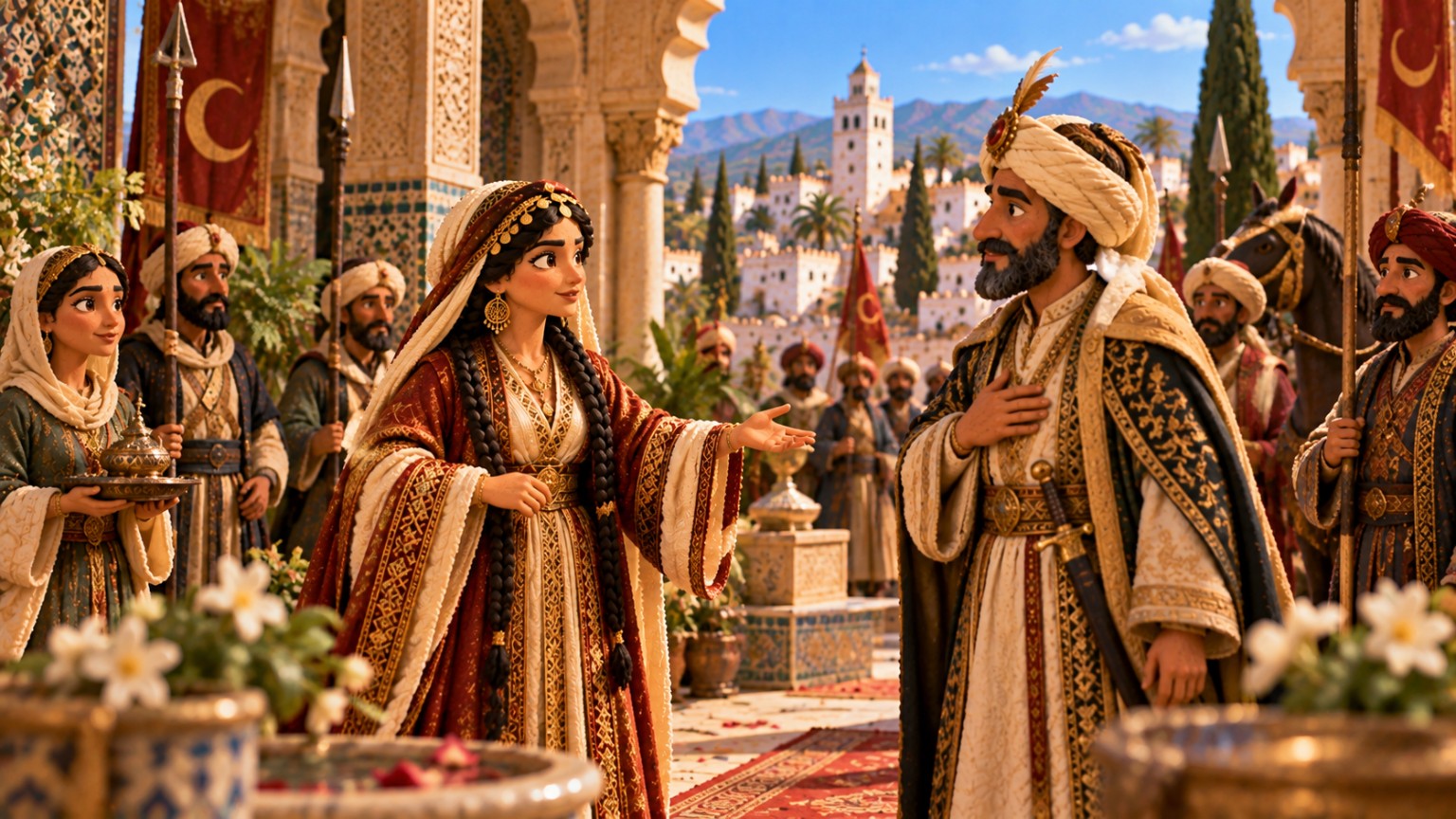
In 1541, something remarkable happened. Ahmad al-Wattasi, sultan of the Wattasid dynasty, married Sayyida. And the wedding took place in Tétouan, not in Fez, the sultan’s seat of power. The episode has fascinated storytellers for generations because it seems to reverse the expectations of its time: the ruler travelled to her city. We cannot know the words they exchanged when they met, but we can understand what was at stake. This marriage was also an alliance between centres of power. Sayyida did not vanish behind her new husband’s status; she remained closely connected to the government of Tétouan. She had travelled far from her youth among the Rif Mountains. Yet no political position could remain secure forever.
7 · The End of Her Rule
A year later, in 1542, her rule came to an end. Rivals linked to the al-Mandri family succeeded in removing her from power. As so often happens in history, the accounts preserve the outcome more clearly than the feelings of those who lived through it. We do not know how Sayyida received the news or what she felt as she left the city she had governed. We do know that her journey led her back to Chefchaouen. Much of her later life fades from view amid disputed dates and the silences of the chronicles. But it would be unfair to reduce such a life to its final setback. Tétouan had changed during her years in power. And the name of its lady would not disappear with her.
Epilogue · The Woman Behind the Legend
Over time, history dressed Sayyida al-Hurra in its most dramatic costume: that of a corsair. It is a powerful image—a woman facing the sea, defying her enemies and shaping her own fate. But behind the legend lies something even more compelling. There was a child shaped by the memory of al-Andalus, a young woman who knew the towns of the Rif, a ruler who held alliances together and a woman who lost power without fading from memory. We may never know every detail of her life. We do not need to invent them to recognise how extraordinary her journey was. The Lady of Tétouan was far more than a figure among sails and swords. She left her mark on the history of her time. And that is the story worth telling.