
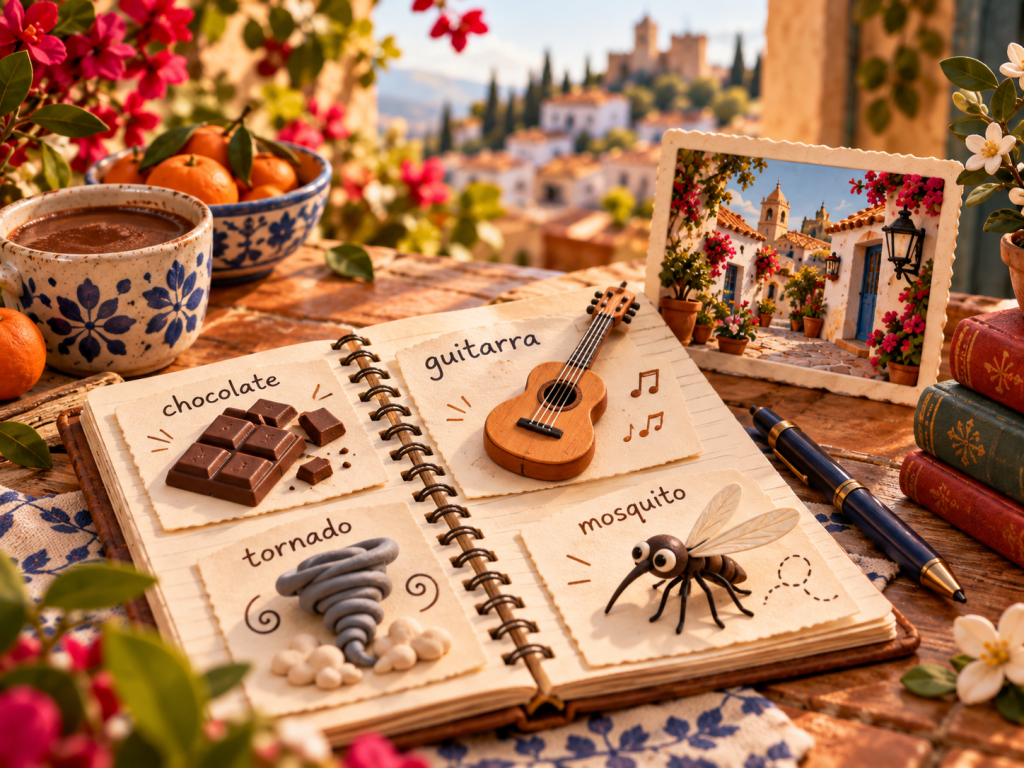
You may already recognise more Spanish than you think. Words such as chocolate, animal, hospital and popular look familiar to English speakers. Other words, such as música and familia, are easy to connect with music and family.
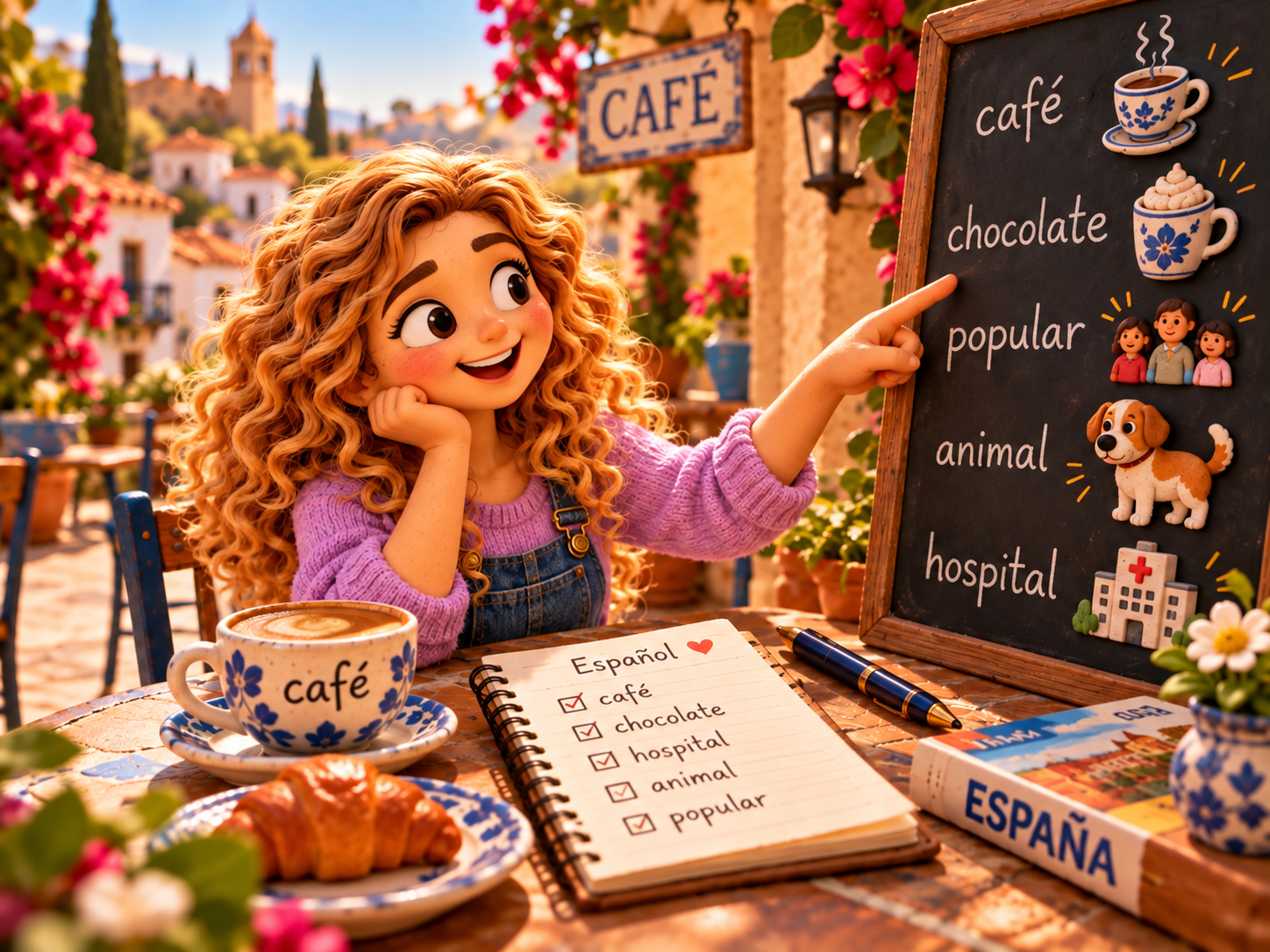
Some true Spanish–English friends
These familiar words give you a useful starting point. Some share the same spelling; others have small changes. Recognising a word is the first step — learning its Spanish pronunciation and how it is used comes next.
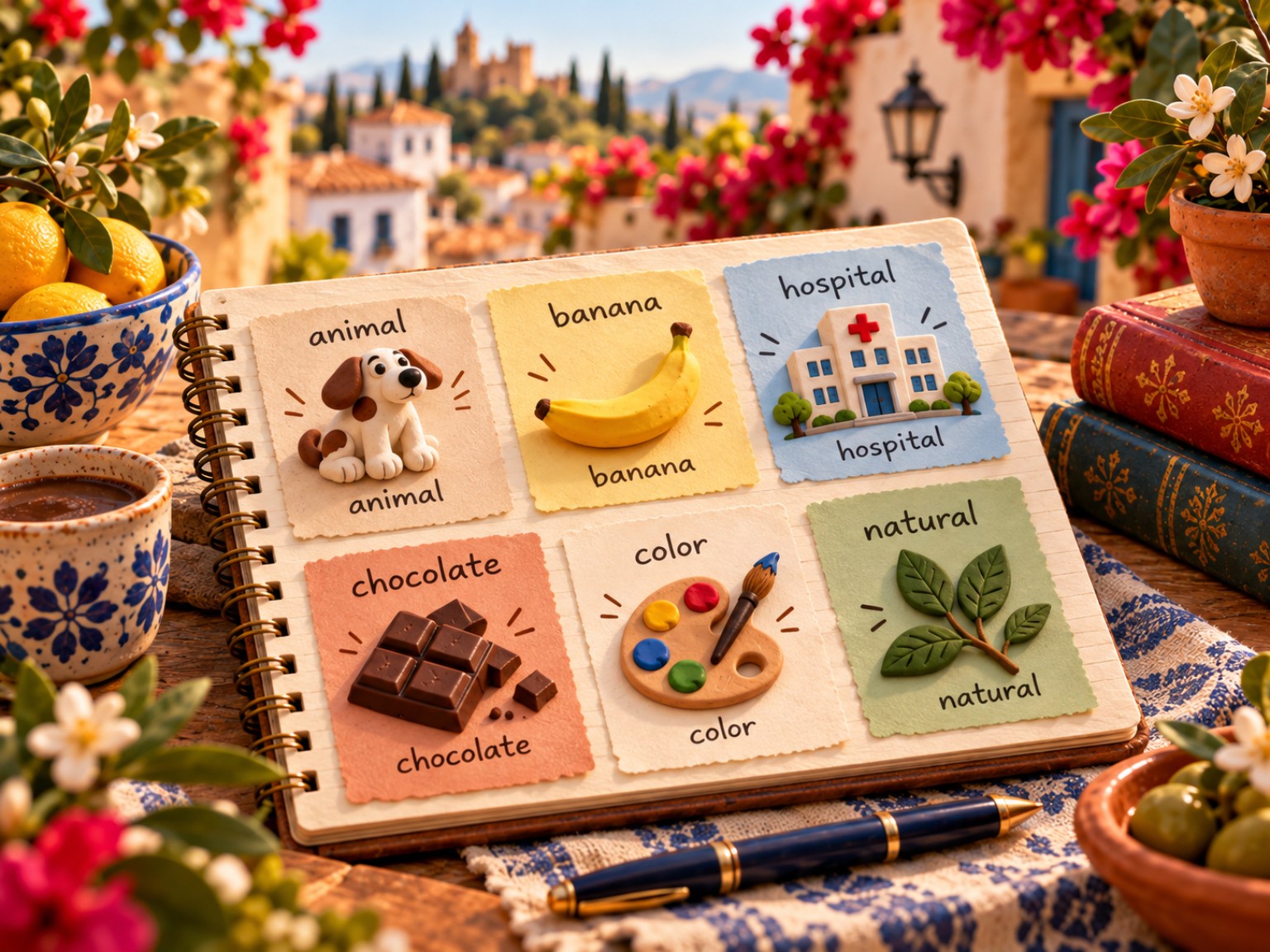
Animal · banana · hospital · chocolate · color · natural
These words share their spelling with English. In British English, color is usually written colour.
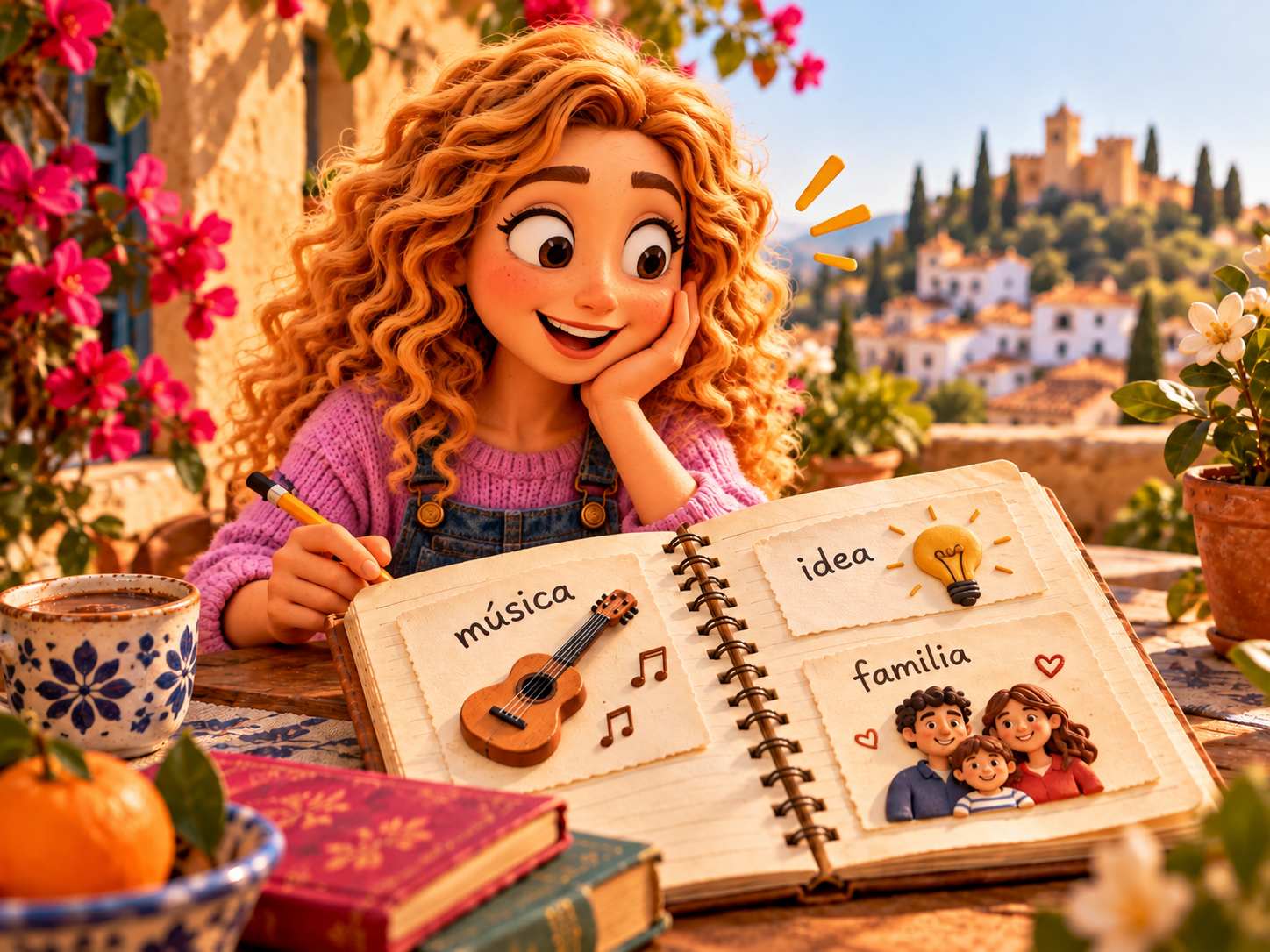
Música → music · idea → idea · familia → family
Look for similarities, but pay attention to Spanish spelling and accent marks.
Familiar words: check the meaning
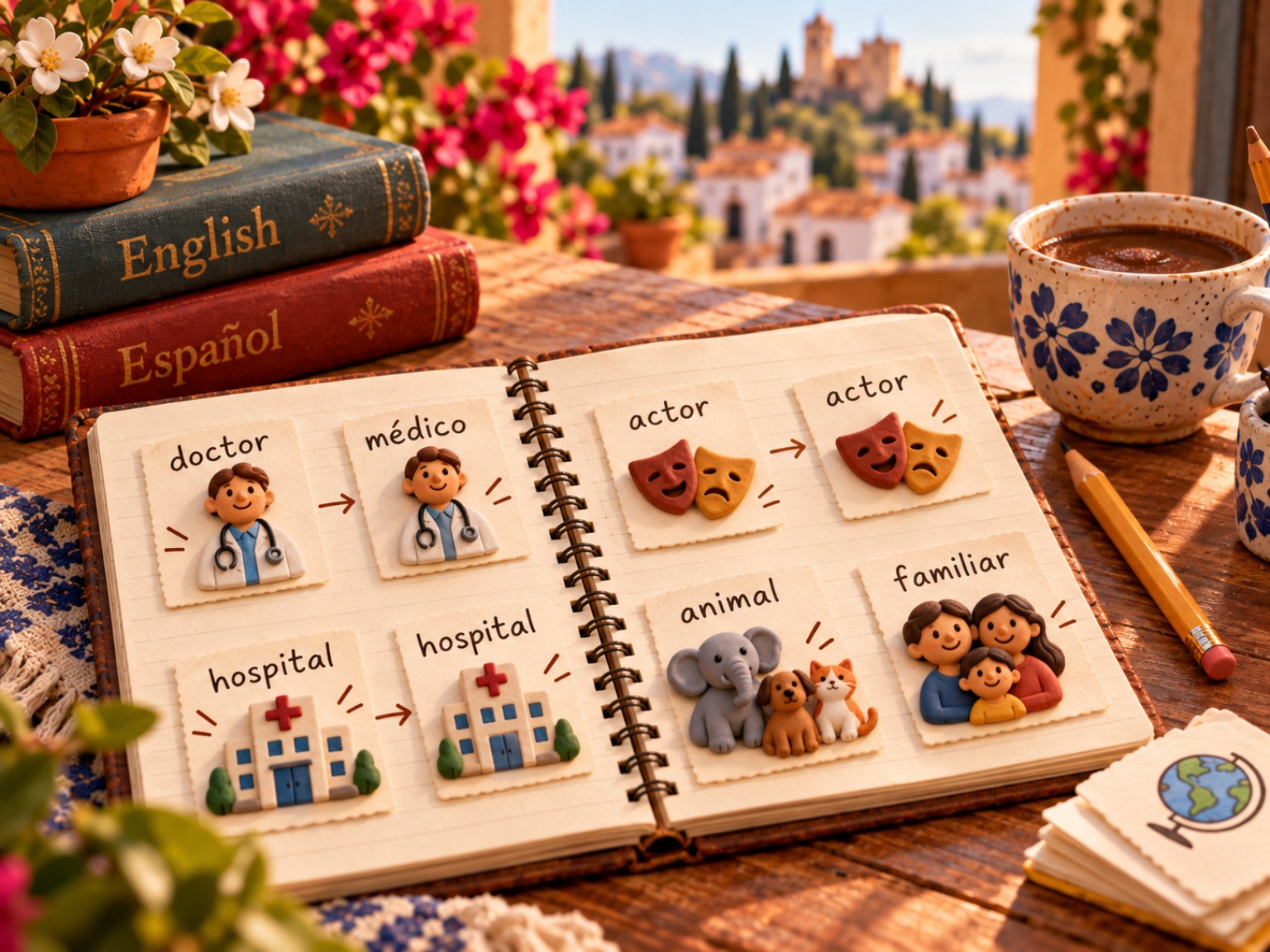
The notebook includes actor → actor and hospital → hospital. For a medical doctor, Spanish commonly uses médico or médica; doctor and doctora are also used. Be careful with familiar: the picture shows a family, but the Spanish noun for family is familia. Spanish familiar can mean familiar or related to the family, depending on context.
Listen to the Spanish pronunciation
Although Spanish and English have many words in common, they are not pronounced the same way. Listen to each recording, repeat the Spanish word and notice the stress.
rápido — rapid / fast
experiencia — experience
honor — honour
temporal — temporal
Un temporal can also mean a storm.
normal — normal
evidencia — evidence
crimen — crime
Spanish also uses delito for an offence or crime; crimen often refers to a serious crime.
estación — station
Estación also means a season of the year: summer is una estación.
interesante — interesting
imposible — impossible
reputación — reputation
literal — literal
armonía — harmony
destino — destiny
Destino can also mean a destination.
real — real
Real also means royal: la familia real is the royal family.
capital — capital
For capital letters, Spanish uses mayúsculas. Capital is used for capital cities and economic capital.
Try it yourself
Choose three words you recognised before reading. Listen again, say them aloud and write a short Spanish sentence with one of them. You already have a starting point — now make those words your own.