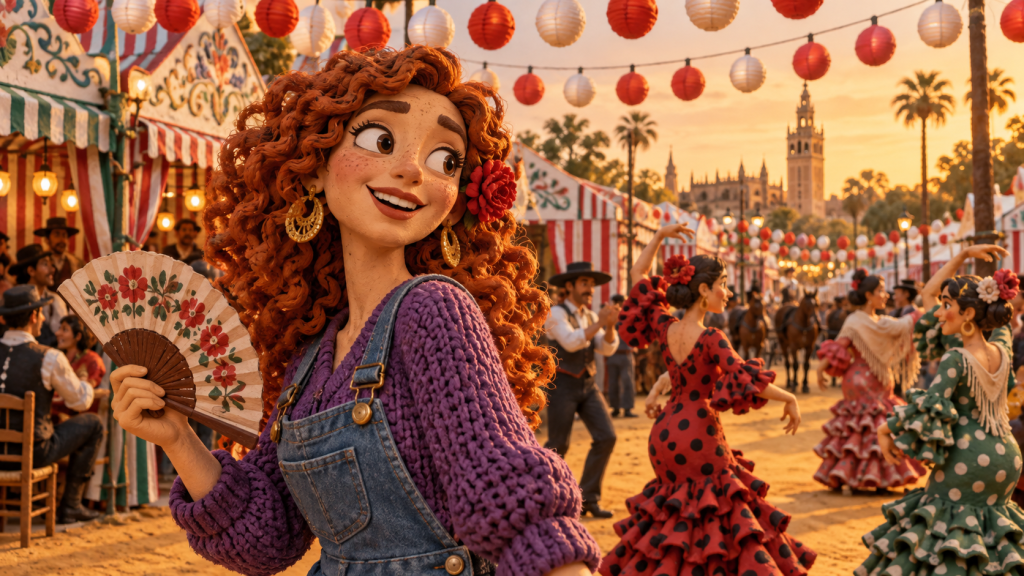
La Feria de Abril de Sevilla brings together lanterns, colourful dresses, horse-drawn carriages, music and gatherings with family and friends. It is one of Spain’s best-known spring celebrations — but it began as a place to do business.
From livestock market to spring celebration
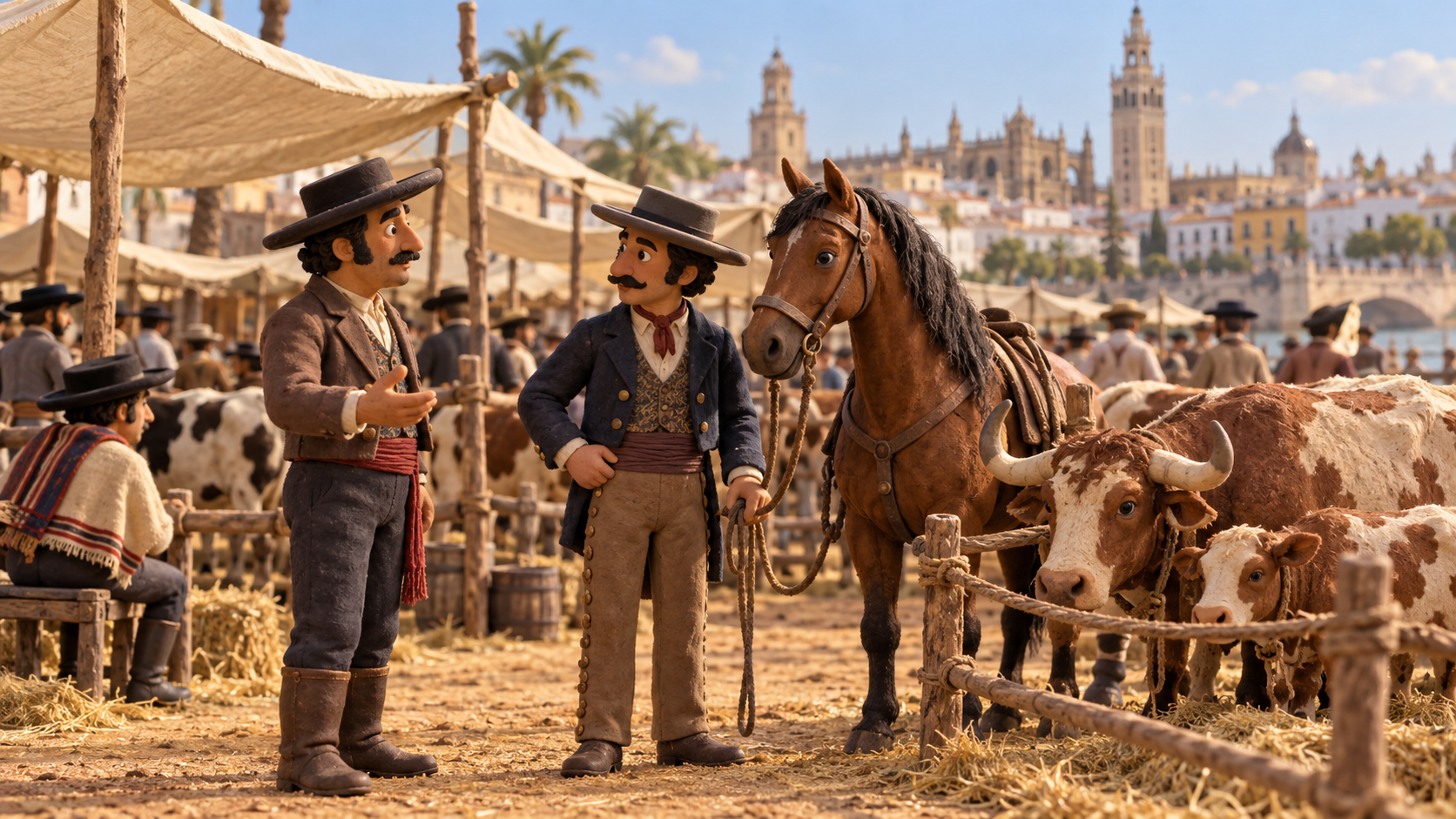
The modern fair was proposed in 1846 by two councillors, José María Ybarra and Narciso Bonaplata. It opened on 18 April 1847 at the Prado de San Sebastián, initially lasting three days.
Its purpose was commercial: buying and selling livestock. Yet the social side grew alongside the trading. Food, singing and dancing gradually helped transform a market into the celebration we recognise today.
There was also an older precedent: Alfonso X had authorised fairs in Seville in 1254. The nineteenth-century initiative revived a tradition of fairs, rather than simply continuing an unchanged medieval festival.
The story of the flamenca dress
The traje de flamenca is closely connected to Andalusian women’s working clothes. The Ayuntamiento de Sevilla describes simple cotton dresses with ruffles, an apron and a small shawl among its antecedents.
As wealthier women adopted and adapted this clothing, fabrics, decoration and accessories became more elaborate. The Ibero-American Exposition of 1929 helped consolidate its place at the fair.
It is a living tradition: the cut of the dress, its colours and its ruffles have changed over the decades. There is much more to its history than a single, fixed costume.
Inside the casetas
The casetas are decorated tents where people meet, eat and dance. Many belong to families, groups or associations and have private access; others are public and welcome visitors.
The fair begins with the alumbrao, the ceremonial switching-on of its lights. Paper lanterns brighten the streets, and a large temporary entrance — la portada — becomes a familiar meeting point.
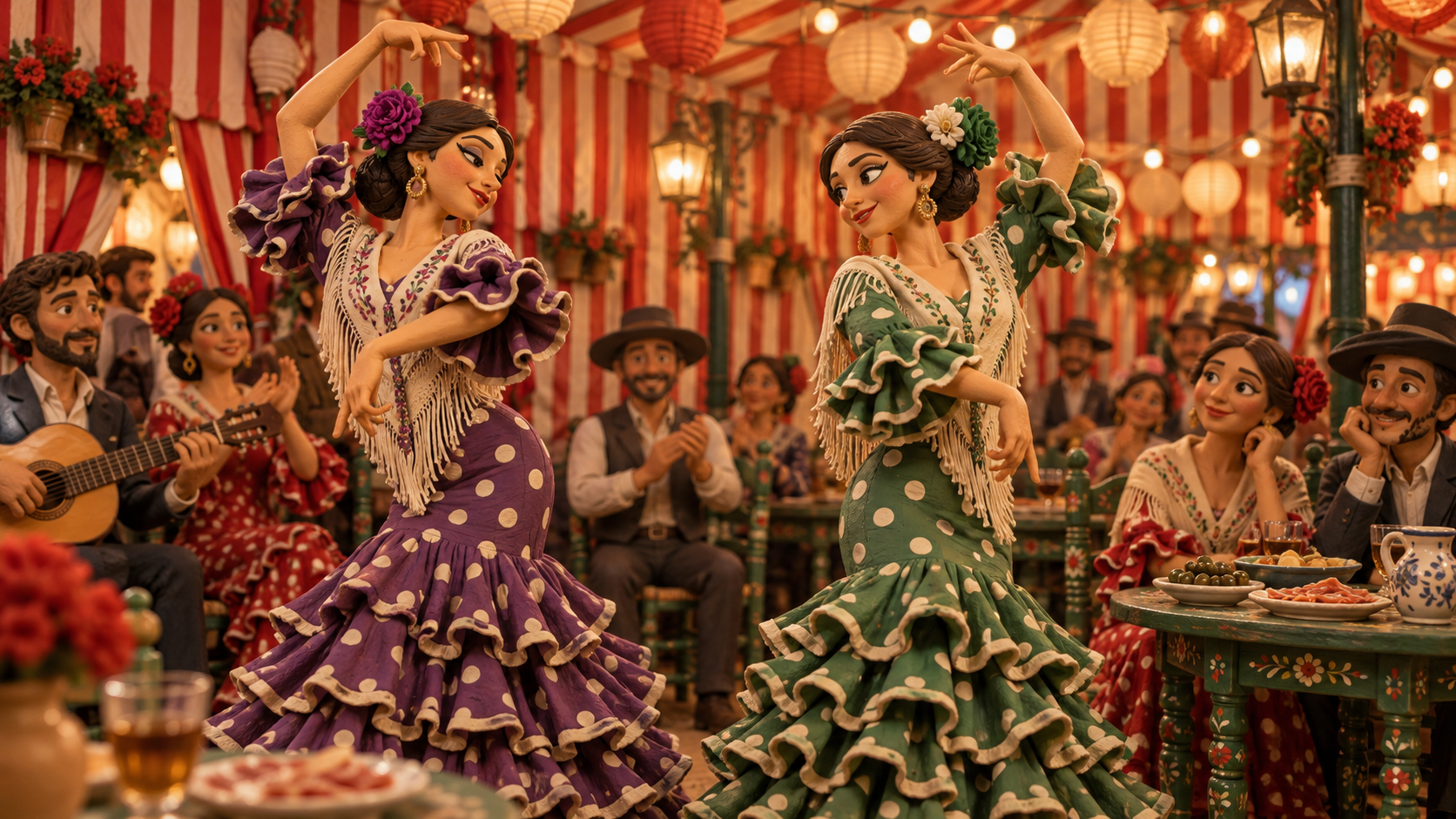
For many people, the fair is above all a reunion: a chance to spend time with friends and family, share food, and enjoy music and dance. The costumes and decorations are striking, but the social life gives the celebration its character.
A few Spanish words for the fair
| Español | English |
|---|---|
| la feria | fair |
| la caseta | decorated tent where people gather |
| el farolillo | small paper lantern |
| el traje de flamenca | flamenca dress |
| los volantes | ruffles |
| el abanico | fan |
| el ganado | livestock |
| bailar sevillanas | to dance sevillanas |
¿Vamos a la feria?
Shall we go to the fair?
¿Esta caseta es pública?
Is this caseta open to the public?
Me encantan los farolillos.
I love the paper lanterns.
When does it take place?
The dates vary from year to year, and despite its name the fair can take place in May. For the dates, programme and visitor information for a particular edition, check the Ayuntamiento de Sevilla’s official fair pages.
Sources and further reading
Ayuntamiento de Sevilla: origins and history · The flamenca dress.
Visita Sevilla: the fair and its casetas · Junta de Andalucía: the evolution of the flamenca dress through historical images.