
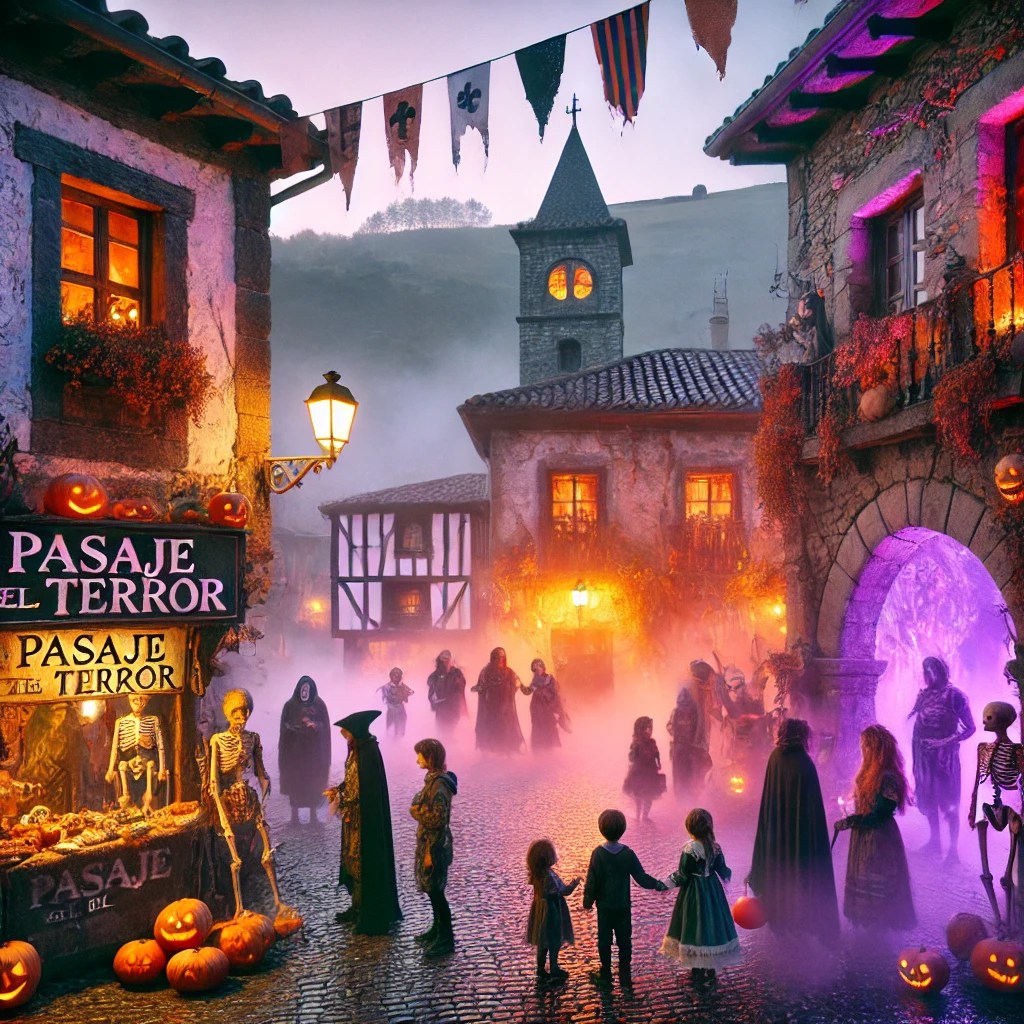
Believe it or not, Halloween has been celebrated in Spain since time immemorial, long before Christianity, the Celts of the Iberian Peninsula already celebrated Samain, the Celtic name for this important celebration.
The Celts, celebrating the end of summer and the harvest season, believed that the spirits of the dead returned, so they left them food as an offering and disguised themselves to avoid being possessed by them.
Then came Christianity, and let’s say that they “appropriated” some of the festivals, rites and customs of the inhabitants of the peninsula, which were not only Celtic by the way, but let’s focus on Samain which, in this way, became All Saints’ Day. Then came Christianity, and let’s say that they “appropriated” some of the festivals, rites and customs of the inhabitants of the peninsula, which were not only Celtic by the way, but let’s focus on Samain which, in this way, became All Saints’ Day. Thus, this date continued to be celebrated with a sort of mixture of old and new customs.
But let us move forward a few centuries, to Franco’s regime in particular

Although everything that happened during the forty years of Franco’s dictatorship could be a perfect horror story, we are not going to delve into this period in this post. Suffice it to say that it was a time of savage repression in which any celebration that was not strictly Catholic was forbidden. Samain disappeared to make way only for All Saints’ Day. The celebrations then consisted of “castañadas” (collecting and roasting chestnuts) on 31 October and going to the cemetery to bring flowers and pay homage to our dead on 1 November, although the night of the 31st was still known as the night of the witches.
Halloween nowadays
Nowadays, we still do “castañadas” and visit cemeteries, but we are also recovering our old traditions, we carve pumpkins (we did it before the American Halloween, although some Spaniards think it is an American fashion), children ask for sweets, we tell each other scary stories and it is still our witches’ night. We have also acquired new customs (influenced by American films), such as dressing up in costumes shouting trick or treat.
Be that as it may, this is how cultures are built, with bits and pieces of many others, and although it is not celebrated in exactly the same way in all the autonomous communities, I am sure that if you visit any of them you will have a great time.😉
Three mythological characters and three terrifying legends
LA GUAJONA
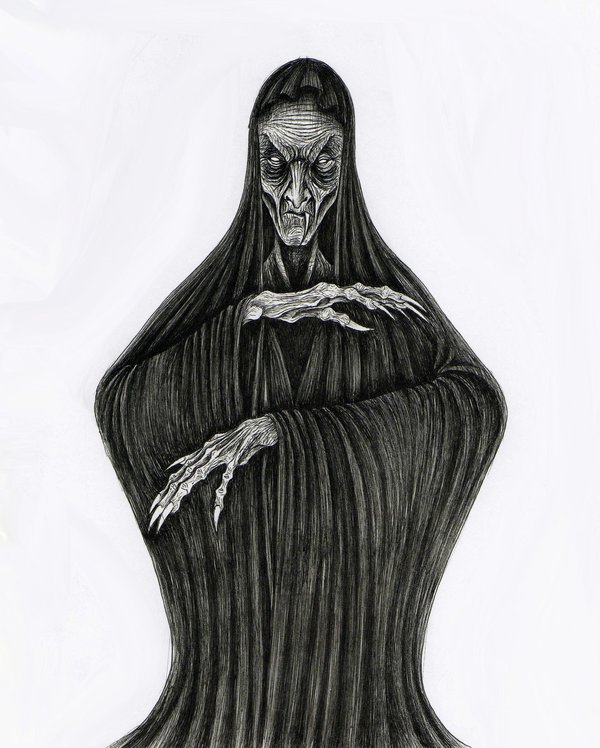
La Guajona is a witch from Cantabrian mythology, she walks silently through the night covered in a black cloak to cover her horrible bird feet. She has a long tooth that reaches her chin which she uses to suck the blood of children and adults while they sleep. Its victims do not die, but wake up exhausted and sick. It hides during the day, no one knows where, but it is believed to be underground.
PESANTA

Mythological creature belonging to Catalan culture. This large black dog has a large iron claw with which it destroys anyone who crosses its path. It enters through the locks or under the door and climbs on top of sleepers, squeezing their chests and causing terrible nightmares (associated with sleep paralysis).
Guayota

Guayota is a demon from the Guanche mythology of Tenerife (Canary Islands). According to the aborigines, Guayota inhabited the Teide volcano. Remains of offerings have been found in numerous volcanic tubes. Guayota must be appeased, because if he suffers a fit of rage he can make Teide erupt.
EL CORTIJO JURADO
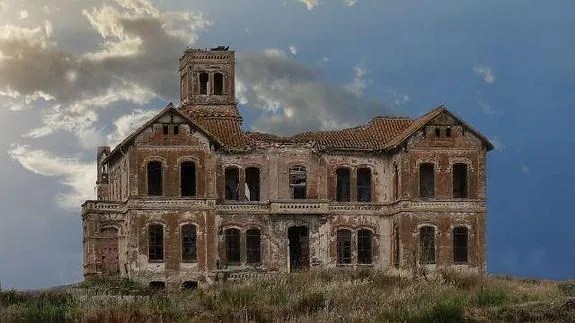
According to the story, in this farmhouse located in Campanillas (Málaga), there lived a wealthy family who kidnapped young girls and murdered them after subjecting them to terrible tortures. It is thought that they may have been buried in different parts of the vast grounds as they were never found. It is said that their spirits still haunt the farmhouse calling for justice and rest.
LA SANTA COMPAÑA
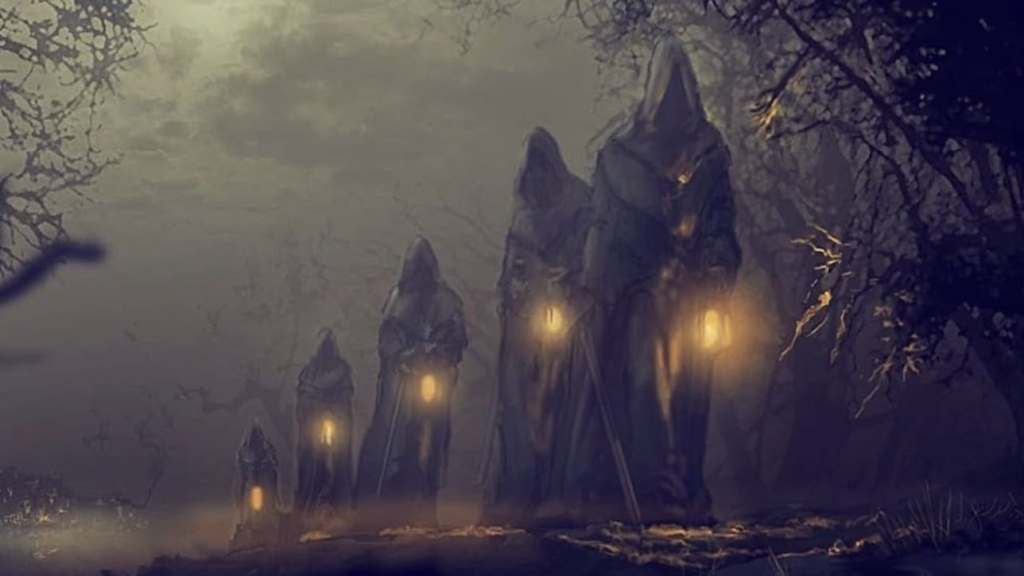
According to this Galician legend, on the 31st at midnight the souls in purgatory go out in procession, at the head of the procession is a living person with a cross representing mortality, and a cauldron representing penitentiary for their sins. The holy campaign comes to announce the death of someone or their loved ones.
If you meet the procession you can lie face down or draw a circle on the ground, get inside, and wait for it to pass. If there is a knock on your door, don’t open it. Under no circumstances talk to the living person, because the only way for him to free himself is to talk to you, and then you will take his place and end up in the pugatory. And remember that although the holy campaign always comes out on Halloween, you could meet it on Midsummer’s Eve or any other day.
El duende de zaragoza

The first official investigation of a paranormal case in Spain was in 1934 in the city of Zaragoza. On September 27th of that same year, at number 2 Gastón de Gotor Street, the neighbours were awakened in the middle of the night by loud laughter. This was the beginning of a story that remains unsolved.
The next event took place on the 15th of the same month, when the maid was about to light the fire to cook and heard a terrifying voice saying: “For the love of God, don’t light the fire, you’ll burn me”.
The terrified girl told her mistress and they left the house in search of help. The neighbours, alerted, ran to the kitchen to check that it was not a joke, and found that the creature was still talking from inside the cooker. Frightened, they decided to alert the authorities, who began the investigation, but don’t think that they were the only ones who investigated, people from all corners came to the house, and the mysterious creature, far from keeping quiet, even held conversations with the visitors. Well, conversations and… Whatever it was, he was shouting at them, insulting them, and even threatening them with death.
However, the case was so well publicised that even the British newspaper “The Times” reported the strange event:
“An ironic goblin, who speaks through the bell of a chimney, has the inhabitants of Zaragoza startled these days, and they are trying to find out where the mysterious voice is. An architect and several workmen have been called to the site: they have removed the entire floor and even raised the roof, but the work has been totally unsuccessful. The police are actively working, but it has not been possible to prevent groups parked in front of the house from standing out and several people jumping on the roof, in a state of great nervous agitation, to look for the Goblin of Zaragoza”.
November 27, 1934. The Times
As I have already mentioned, the mystery was never solved, for although the goblin even held conversations with those people for long hours, no one saw him.
In 1935, the goblin fell silent forever.
Eventually the building was demolished for fear that the strange being would return and in its place, a block of flats was built called the “Edificio Duende” (Goblin Building).

 Learning the Cervantes Language
Leave a comment